Renovation guides
Living through a renovation, decide these before week one
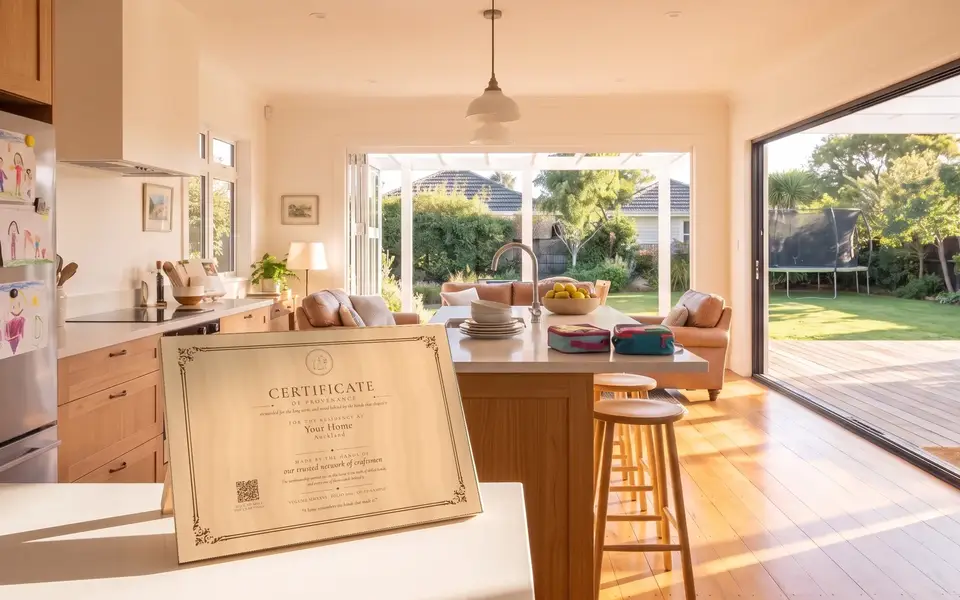
The renovations that go badly for the people living through them rarely go badly because of the building. They go badly because the household questions were left for the first week on site, when the kitchen is already in the skip and the builder is waiting for an answer. Settle these before the first trade arrives. The job will still be hard work, but it won't run your household.
Where you live
Decide whether you are staying, leaving for the whole job, or leaving for the worst of it. Staying saves rent and lets you see the work every day. It also costs you sleep, and it costs the builder time, because every day starts with moving your things and ends with making the house safe for you. If you stay, decide which rooms are yours and which are the site, and hold that line. If the bathroom is in the scope, know where you will shower for the weeks it is out. A kitchen and a bathroom together, in a house you are living in, is the hardest combination to live through.
Ask the builder which stages leave the house least liveable: demolition, floor sanding, the days the water or power is off. Plan to be out for those, even if you stay for the rest.
Old paint and asbestos
If your house was built in the 1980s or earlier, Health New Zealand's advice is to presume it has lead-based paint. If it was built before 2000, WorkSafe says it probably contains some asbestos, in materials such as textured coatings, vinyl flooring and some cladding and roofing sheets. The risk comes when they are sanded, cut or broken, and that is exactly what a renovation does.
Before demolition, ask the builder three things: which materials will be tested, who will remove anything that tests positive and whether that needs a licensed removalist, and how dust from old paint will be contained. I came to this work as a painter, and old paint is where I would ask the most questions. Sanded indoors without control, it puts fine lead dust through the whole house. Health New Zealand's guidance is to keep children and pets away from the work area, cover floors, and clean up by wet wiping surfaces and then vacuuming with a high-efficiency dust filter. If old paint is being stripped inside, that is a good week for the family to be somewhere else.
The kitchen plan
Ask the builder how many weeks you will be without a working kitchen, and plan for that. Set up a temporary kitchen before demolition: a bench, the fridge, a microwave, a portable induction hob, the kettle, and a sink you can reach, usually the laundry tub. Decide where the dishes get washed and where the rubbish goes. A household with this set up on day one eats at home. One without it eats out for weeks, and the budget feels it.
Access, parking and keys
Decide where the trades park, where the skip sits, where materials are stacked and kept dry, and which door is the site entrance. Tell the household the site entrance is not theirs. Decide whether the builder has a key or you are up to open the door every morning, who locks up at the end of the day, and what happens with the alarm. Agree which toilet the trades use. If the driveway is the only parking, your car is on the street for the duration, and a word with the neighbours before the skip arrives goes a long way.
The dust line
Agree with the builder where the line is between the site and the house, and have it built before demolition starts. That means plastic sheeting taped floor to ceiling or a zip door across a hallway, floor protection along the route to the skip, and a rule that the line stays shut. Decide which rooms get sealed, cover or move anything soft, and expect dust anyway. Ask whether any heat pump or ventilation unit near the work should be switched off and covered while the dust is flying. Agree who cleans the house side, and how often. Dust is what people remember about a renovation, and once it has settled into a wardrobe it is a long clean to get it out.
Who decides, and how fast
Name one person in the household who gives the builder answers. Two people answering differently on the same day costs a day. Agree how quickly decisions will be answered: a tile choice, a variation, a power point moving. A job waiting two days for a decision is often a job two days longer, and sometimes a trade rebooked for the following week.
Any change that moves the price or the finish date is a variation, and your contract should say how variations are agreed. Before the work is done, get the change, its price and its effect on the finish date in writing, and sign it. Keep every other decision in writing too, even a one-line text, and keep them all together.
The weekly meeting
Set a fixed time each week, twenty minutes on site with the builder, same day, same hour. What was done, what is next, what is needed from you and by when, what has changed. Write it down afterwards and send it to the builder so there is one account. A lot of disagreements at the end of a job come back to something said in week three that only one person remembers.
Before the walls close
On a consented job, the council's pre-line inspections check the building work, the plumbing and the insulation before the linings go on. That is your moment too. Walk every room and photograph every wall and ceiling before the gib goes up, so the pipes, cables and framing are on record. When you want to hang a heavy mirror or trace a leak in five years, those photos tell you where to look.
What to do next
Write a one-page household plan and agree it with the builder before day one:
- Where you are living, and the stages you will be out.
- The test and containment plan for old paint and asbestos.
- The temporary kitchen, and where you will shower.
- Parking, the skip, keys, the alarm and the toilet.
- Where the dust line runs, and who cleans.
- Who decides, and how fast.
- The weekly meeting time.
Most of these belong in the brief you give the builders before they price, so the quotes allow for them. How to brief a builder so the quotes compare covers that.
Keep the decisions, variations, weekly notes, photos and invoices together and dated as the job runs. That is the renovation's record. If you keep your property's record in the Archive, file them as you go, so the week-three decision and the pipe behind the gib are there when the builder leaves.
More from the Library
Reading a quote, provisional sums and allowances
What PC sums, provisional sums and allowances mean in a builder's quote, where budgets move, what the law gives you, and the questions to ask before you sign.
How to brief a builder so the quotes compare
A written brief with a numbered scope, what is in and out, the finishes and the unknowns, so every builder prices the same job and the quotes line up.
Before you renovate, gather these documents
The paperwork to find before the first quote, why designers, builders and council ask for each piece, and where to find it.
Looking after a home starts with a record of it.
The Archive is by invitation. Tell us about your home. Every home we welcome starts with 30 days free.
Questions? [email protected]